See the street behind the loan
Know whether the sector around a borrower's business is growing, holding or draining, and where shops are opening that could host a banking agent.
A calibrated verdict for every sector
Calleviva's algorithm reads the commercial activity of every business in the city, month by month, separates real change from noise, and says whether each sector is rising, flat or falling, with an honest range and a comparison to the rest of the city.
Sector risk
Each borrower's sector rising, flat or falling against the city, refreshed every quarter.
Early warning
Sectors where places go quiet faster than they open, before arrears show it.
Where to place agents
Busy sectors with many small groceries and few agents nearby.
Draw it. Read it. Act on it.
- 01Map the portfolio
Save the sectors where your borrowers trade.
- 02Read every quarter
Verdicts, openings and quiet places, sector by sector.
- 03Adjust
Tighten or widen credit by sector, and send agents where activity is.
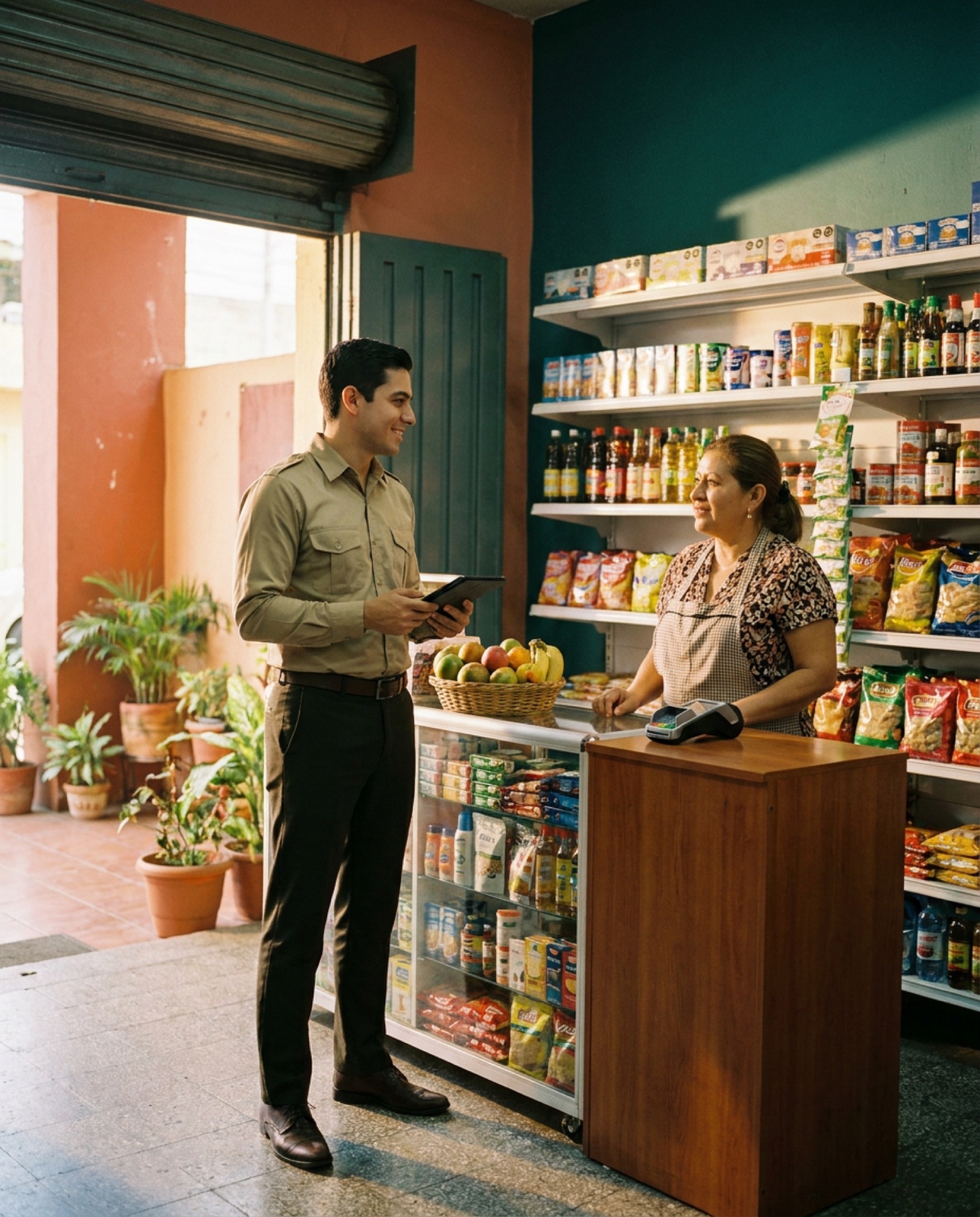
Where online activity is thin, Calleviva still maps every outlet: one in five places here is a small grocery, the traditional channel your trucks serve.
Calleviva never judges a single borrower. It reads the sector, and in barrios with few activity signals it counts outlets instead of calling a trend.
A verdict you can defend
Calleviva's algorithm reads the commercial activity of every business in the city, month by month, separates real change from noise, and gives each sector a calibrated verdict: rising, flat or falling, with an honest range and a comparison to the rest of the city.
Activity, read month by month
The algorithm turns the public activity of every business into a monthly signal and reads two years of it, so each verdict rests on a history, not a snapshot.
The typical business, not the loudest
A random-effects model, the method medicine uses to pool clinical trials, weighs each business by how reliable its own signal is, so no single outlier can move a sector.
Uncertainty you can trust
Ranges come from leave-one-out resampling with small-sample corrections, and are audited by splitting sectors into random halves: they disagree about 5% of the time, as a 95% range should.
Season and city removed
Each verdict compares the same months a year apart and sets the sector against the rest of the city, so holidays and city-wide growth cancel out.
Each business's own rhythm
Silence is judged against each place's own pace and burstiness, so a quiet month is not mistaken for a closure.
It knows when to say nothing
Areas pool together until the signal is strong enough to judge. Below that, Calleviva says so and counts outlets instead of guessing.

Tell me when it opens
One email when the open beta starts, and one if your city is added. Nothing else.